
If you’re a homeowner in Buffalo, Rochester, Syracuse, or anywhere in between who’s thinking about going solar, you’ve probably got concerns about our weather. Can solar really work here?
And if you’ve considered solar as a solution to rising energy costs, you’ve probably talked yourself out of it just as quickly.
“We don’t get enough sun here.”
“What about all that snow?”
“Winter would kill any savings I’d get.”
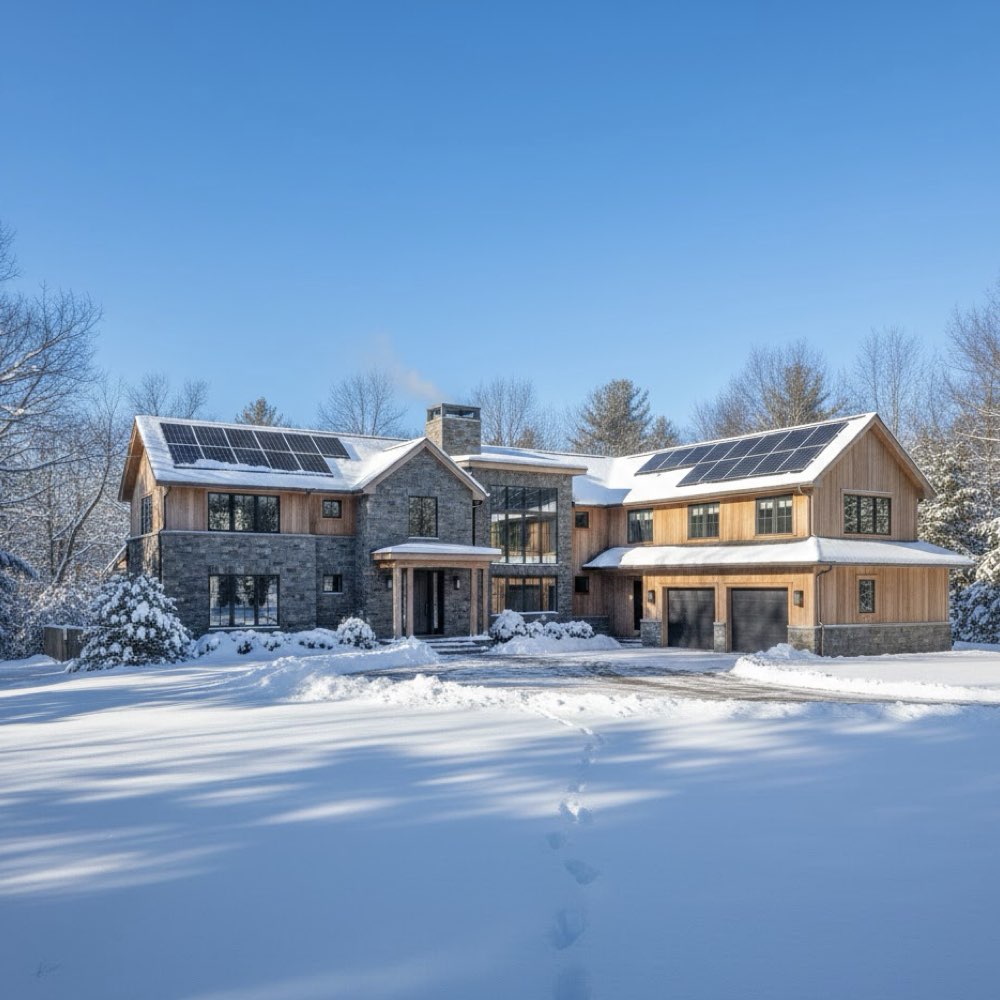
These concerns make sense on the surface. Western and Central New York isn’t exactly known for sunny weather. But here’s the thing: solar power works differently than most people think. And when you factor in where electricity costs are headed in our region, the math becomes pretty compelling—even with our weather.
Let’s clear up some of the biggest misconceptions about residential solar in upstate New York.
Myth #1: Solar Panels Don’t Work in Cold Weather
Here’s something that surprises most people: Solar panels are actually more efficient in cold temperatures.
The confusion arises from conflating heat with light. Solar panels need light to generate electricity, not heat. The semiconductor materials inside solar cells work better when they’re cool, which means your panels operate at peak performance on those crisp, bright winter days.
The key factors are daylight hours and the sun’s angle. Yes, we have shorter days in winter, and the sun sits lower in the sky. However, modern solar systems are designed to account for these seasonal variations. The calculations for your installation already account for December and January, not just July. NST will provide the calculations to ensure you have the data you need to make an informed decision.
Myth #2: Snow Will Cover My Panels and Kill My Production
Solar panels are typically installed at an angle of 30-40 degrees in our region. This helps the snow slide right off. Gravity does most of the work for you.
Additionally, solar panels have a dark, smooth surface that absorbs light and converts it to heat. Even a small amount of sunlight will warm the panel enough to melt snow faster than it would on your regular roof.
The bottom line? Snow is a temporary inconvenience at worst, not a deal-breaker.
Myth #3: The Economics Don’t Work With Our Weather
This is where things become particularly interesting for homeowners in Western and Central New York.
Your electricity costs keep climbing. On average, electricity rates in our region are increasing by nearly 10% annually. That’s not a one-time spike—it’s a sustained trend.
The math is ugly! If you’re currently paying $150 a month for electricity, in five years, you could be paying around $240 a month. In ten years? Over $385 a month.
And if you’ve recently added a pool or bought an electric vehicle, you’ve already seen how quickly those energy costs can pile up. A pool can add $50-100 to your monthly electric bill during the summer months. An EV can add another $30-50 per month, depending on how much you drive. Combine those with annual 10% rate increases, and you’re looking at some serious money walking out the door every month.
Solar panels flip this equation. Once your system is installed, your cost per kilowatt-hour is essentially locked in for the 25-30 year lifespan of the panels. While your neighbors are dealing with 10% annual increases, you’re generating your own power at a fixed cost.
Yes, your panels produce less in December than in July. But the system is designed for that. Net metering programs (available through most utilities in New York) let you bank credits from your high-production summer months to offset your winter usage. You’re using your excess June and July production to cover your January shortfall. It all evens out over the year. At NST, our solar specialists will help you understand the ongoing financial benefits.
Myth #4: We Don’t Get Enough Sun in Upstate New York
Here’s a fact that changes the conversation: Germany is one of the world’s leading countries for solar energy adoption (aiming for 80% renewable electricity by 2030). And Germany gets less annual sunlight than Western and Central New York.
If solar works economically in Germany, it absolutely works here.
Solar panels don’t need year-round blue skies to work. They generate electricity from daylight, not just direct sunshine. On an overcast day, your panels continue to generate power.
Buffalo gets about 2,400 hours of sunlight per year. Rochester gets around 2,500 hours. Syracuse clocks in at roughly 2,500 hours as well. Germany averages between 1,600 and 2,000 hours, depending on the region. We’re actually in a much better position than one of the world’s solar leaders.
The Real Question: Can You Afford NOT to Go Solar?
Solar panels work in cold weather. They handle snow just fine. Western and Central New York gets plenty of sunlight to make solar viable. And with electricity costs rising at an average of 10% per year in our region, waiting to go solar means you’re just paying more before you start saving.
Going solar is a financial hedge against rising energy costs. It’s taking control of one of your home’s most significant ongoing expenses. In Western and Central New York, despite our reputation for gray skies and snow, Solar power will bring sunshine to your bottom line!
Ready to Explore Solar for Your Home?
At National Solar Technologies, we understand the unique challenges and opportunities of going solar in Western and Central New York. We’ve helped thousands of customers just like you take control of their energy costs.
The best way to know if solar makes sense for your situation is to get a professional assessment. NST will assess your roof, energy usage, and property’s sun exposure to provide a realistic view of what solar can do for you.
You might be surprised at how much you could save, even with our upstate New York winters.
The question isn’t whether solar works here. It does. The question is whether you’re ready to stop watching your electric bill climb 10% every year and start taking control of your energy costs.
